Local Keywords
What They Are & How to Use Them (Without Making It Weird)
What Are Local Keywords?
Local keywords are search phrases that include:
- A service
- A location
For example:
- “Brow wax in Colorado Springs”
- “Massage therapist near me”
- “Hair extensions Downtown COS”
- “Bridal makeup artist Monument CO”
The location could be:
- A city
- A neighborhood
- A region
- A nickname (think “Twin Cities” or “SoCo”)
- Even “near me”
When someone adds a location, Google knows they’re looking for something local and immediate.
Step 1: Think Like Your Client (Not Like Yourself)
You might say: “I’m a licensed esthetician offering customized corrective skincare.” Your client might search:
“Acne facial Colorado Springs”
“Best facial near me”
“Hydrafacial Briargate”
They’re searching with a completely different mindset, which means they’re using entirely different language than you might expect.
What To Do:
- List nearby:
- Cities
- Neighborhoods
- Suburbs
- Common abbreviations (Example: “COS” instead of “Colorado Springs”)
- Ask real humans:
- DM a few clients
- Ask on Instagram Stories
- Text a friend, “If you were searching for my service, what would you type?”
You’d be surprised how different the answers can be.
Step 2: Look at Other Local Businesses
Search your service + your city. Example:
- “Nail tech Colorado Springs”
- “Lash extensions Monument CO”
- “Massage therapy Briargate”
Then look at:
- Their website headlines
- Their SEO titles (what shows up in Google)
- Their page names
- Their blog topics
You’re not copying. Rather, you’re studying the language that’s already working.
Step 3: Choose the Keyword That Actually Gets Searched
Here’s where people get tripped up. Just because something sounds right doesn’t mean people search it.
Real Example
A makeup artist might say: “New England Makeup Artist”. This sounds broad and impressive. But if no one is searching “New England makeup artist,” that keyword isn’t helping, right? Instead, people might be searching:
- “Boston makeup artist”
- “Providence bridal makeup”
People search for where they are, not the entire region. So lead with the city that gets the most search volume, then mention the surrounding areas in your copy.
Important: Don’t Optimize for Somewhere You Don’t Serve
If you’re in Colorado Springs, don’t optimize your entire website for Denver just because it gets more searches. Google compares:
- Your website
- Your Google Business Profile
- Your business address
If your website and business listings don’t align, it confuses the algorithm and weakens trust, which is why consistency is critical.
Where To Put Local Keywords On Your Website
Now that you’ve picked a strong local keyword, here’s where it belongs.
1. SEO Title & Meta Description (Highest Priority)
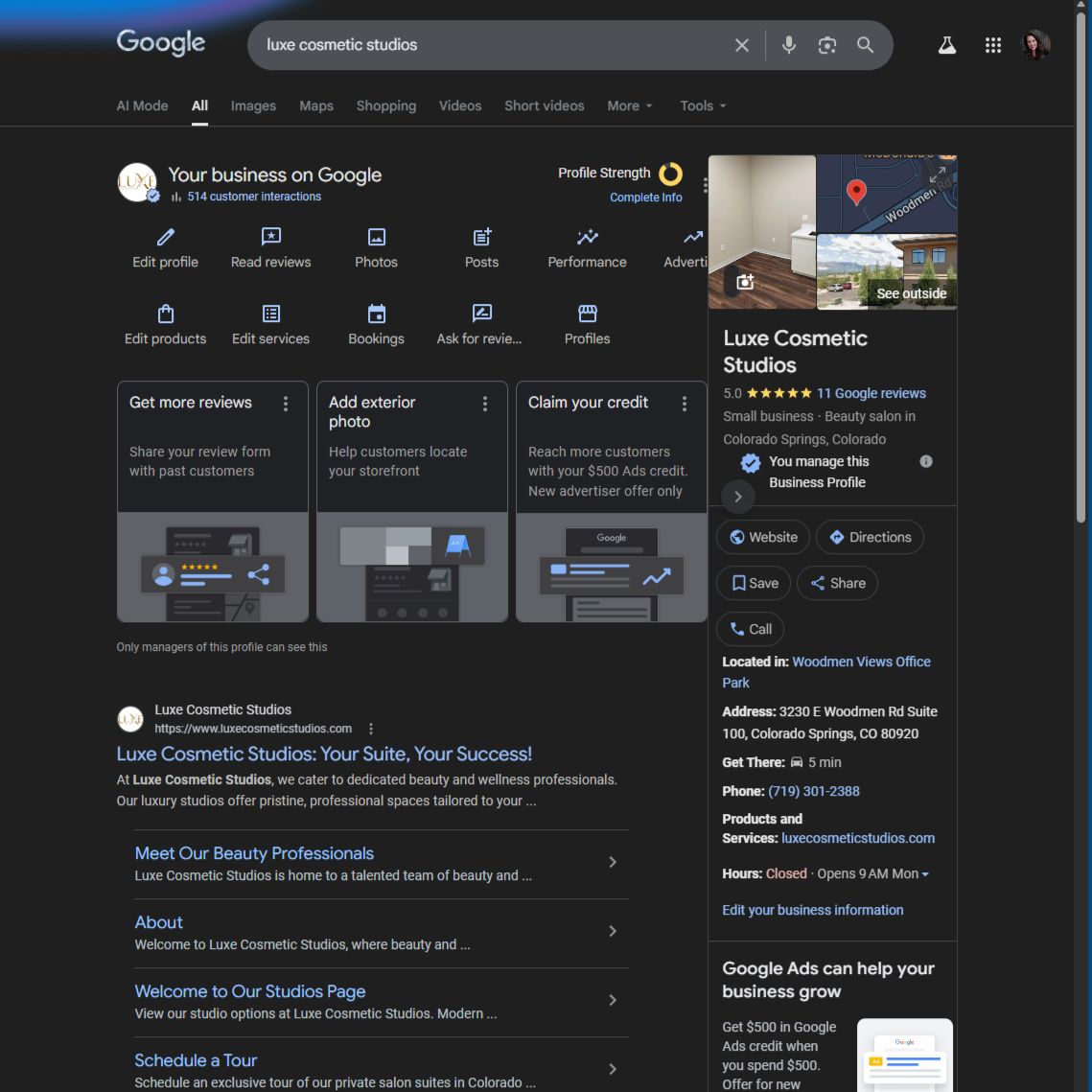
This is what shows up in Google search results. Example:
- “Brow & Wax Specialist in Colorado Springs | [Your Business Name]”
- “Licensed Massage Therapist in Monument, CO”
This space carries significant weight in search results, so it should be used strategically and intentionally. Make sure you’re maximizing it with clear, relevant keywords rather than leaving it underutilized.
2. Your H1 or Main Headline
Your homepage headline should ideally include: Service + Location. Example:
- “Luxury Facials in Colorado Springs”
- “Custom Nail Art in Briargate”
If your main headline is central to your brand voice and you don’t want to change it, simply add a smaller location-based line above it. Strong branding and smart SEO can absolutely work together.
3. Subheadlines (H2s)
Example:
- “Serving Colorado Springs & Surrounding Areas”
- “Now Booking Clients in Monument and Black Forest”
4. Body Copy
When adding local keywords to your website, sprinkle them in naturally. Avoid awkward, repetitive phrasing like
"Colorado Springs facial Colorado Springs skincare Colorado Springs acne treatment"
Google is sophisticated enough to recognize keyword stuffing, and it doesn’t reward it. Instead, write in a way that sounds human and conversational, such as:
I work with clients across Colorado Springs, Monument, and Black Forest who are ready to invest in long-term skin health.
That approach feels authentic, reads smoothly, and still signals clearly to search engines where you serve.
5. Image Alt Text
Every image on your website includes alt text, which helps search engines understand what the image is about. Instead of leaving it as something generic like “IMG_4829.jpg”, update it with a clear, descriptive phrase such as:
- “Hydrafacial treatment in Colorado Springs studio”
- “Briargate nail studio interior”
Not only does this improve accessibility, but it also increases your chances of appearing in Google Images for local searches.
6. URL Slugs (Sometimes)
For example, you might structure a URL like: yoursite.com/colorado-springs-wax-specialist
However, if you plan to expand into additional cities in the future, be careful about locking a single location into every URL. Instead, consider these:
- Keep service pages general
- Add a separate “Locations” page
- Create unique content for each location (if you serve multiple)
Thinking ahead about your growth strategy will save you from having to restructure your website later.
Advanced: Creating Local Content
Once your core website pages are optimized, you can start creating local content that feels more creative and community-focused.
Ideas for Beauty & Wellness Professionals:
- “Best Coffee Shops to Work From in Colorado Springs”
- “Bridal Prep Guide for Colorado Brides”
- “Top Wedding Venues in Monument, CO”
- “Where to Get the Best Spray Tan Before Prom in COS”
Content like this not only attracts local traffic, but also increases the chances that other local businesses will link back to you, which strengthens your local SEO through valuable backlinks.
One important note: if you create separate location pages, they must contain unique content. Simply swapping out city names on nearly identical pages can hurt your rankings due to duplicate content issues.
Don’t Forget Testimonials
Don’t overlook the power of testimonials when it comes to local SEO. Encourage your clients to mention your location in their reviews whenever possible. While a comment like “She’s amazing!” is wonderful, a review that says, “Best lash lift in Colorado Springs!” reinforces your local keywords and strengthens your visibility in local search results. Those small details make a measurable difference.
Local SEO Action Plan
Bi-Weekly
- Respond to new reviews
- Answer Google Q&A questions
- Post updates or offers (reuse Instagram content)
Quarterly
- Upload new photos
- Confirm business info is accurate
- Adjust for seasonal services
Annually
- Review Google guidelines
- Update your description if your services evolved
And when you update your Google profile, make sure you sync it with
Bing Places.
It takes minutes and expands your visibility for free.
Your Homework
Here’s your next step. Choose one primary local keyword and update your SEO title and homepage headline to reflect it.
Then, weave that keyword naturally into your website copy so it reads smoothly and authentically.
Finally, brainstorm one local blog post or piece of content you could create this month to strengthen your local presence.
Local SEO doesn’t have to feel overwhelming. It comes down to clarity, consistency, and thinking the way your clients think when they search. And the best part? Once it’s set up correctly, it works quietly in the background, attracting local clients who are already looking for exactly what you offer. That’s smart marketing working for you long term.